How ADHD Impacts the Postpartum Experience (+ 5 Tips to Plan for Postpartum Wellness)

Whether you already knew about your ADHD or are discovering it during the perinatal period, you might be noticing that certain things just feel “harder” right now (whether or not you’re the birthing person).
ADHD brains are particularly sensitive to dysregulation and change. Sleep deprivation, hormonal shifts, sensory overload, and the total disruption of routine are not minor stressors. For a brain that already struggles with regulation, they are overwhelming in a specific and compounding way.
The postpartum period strips away nearly every scaffold that helped you function. Your schedule is gone. Your sleep is fragmented into intervals too short to reach restorative rest. Your body is flooded with hormones that are still adjusting. The quiet you may have relied on to reset? Also gone.
You're not imagining it. This is not a willpower problem and you're not failing at being a parent.
ADHD brains have particular sensitivities that can heighten stress after having a baby, alongside strengths that can be an asset during postpartum.
Here’s what is actually happening for people with ADHD during the perinatal season and how to plan for postpartum wellness as a household.
The Mental Load Multiplies
Educator Sonny Jane Wise has a helpful definition for executive function: “...a set of mental skills we use every single day to manage our lives.”
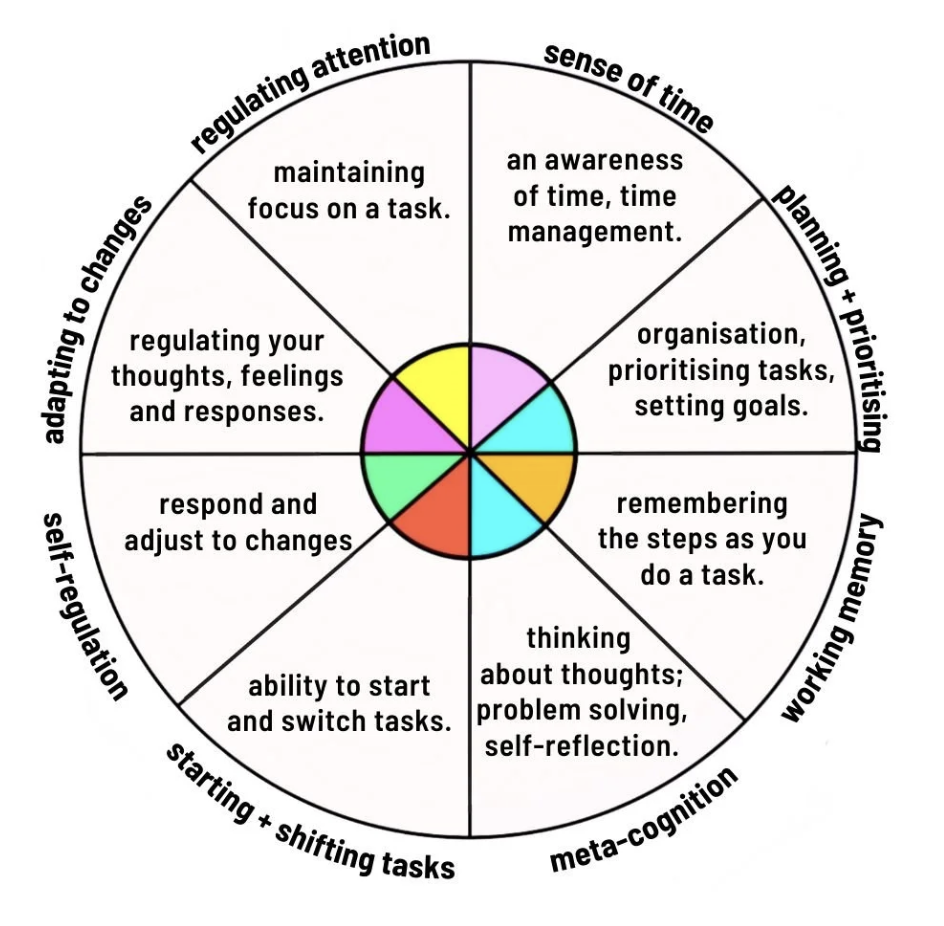
Neurodivergent individuals typically have challenges with things like sense of time, planning, self-regulation, working memory, and adapting to changes. ADHDers are often sensitive to hormonal changes as well.
Enter: parenthood. Parenthood demands all of these skills simultaneously, constantly, without breaks.
Tracking feeding schedules. Remembering which pediatrician appointment is when. Responding to messages from people who just want to know how you're doing while you can barely locate your phone. Calculating sleep schedules and feeding amounts. The mental load of a newborn is significant and hard for everyone. For someone with ADHD, it can feel like the cognitive equivalent of running out of RAM and that the ground is constantly moving.
Task-switching (the cognitive ability to shift cleanly from one demand to the next) is one of the executive functions most reliably disrupted by ADHD. Postpartum asks for it dozens of times a day, often without warning and without recovery time.
You are not failing or bad. Your brain is working overtime with neurological demands. You’re overloaded and need extra support during this time.
The Anxiety That Gets Amplified
One feature of ADHD is hyperactivity. For women, this often presents internally rather than externally in the form of anxiety.
The postpartum period adds a new layer: the hypervigilance of new parenthood, the fear that you’ll miss something critical, the intrusive thoughts that are a normal part of the postpartum experience but feel especially loud when your brain doesn't quiet down easily.
ADHD hyperactivity during the postpartum season shows up as a nervous system that cannot come down: racing thoughts at 2 a.m., sensory overload from a crying baby when you've already been touched all day, the particular torture of needing to rest and being completely unable to. You may find yourself spiraling. Lying awake calculating risks. Refreshing forums at looking for reassurance you won't actually feel once you find it.
When ADHD hyperactivity and postpartum anxiety layer on top of each other, they amplify. The brain that already struggles to regulate becomes even more reactive, more vigilant, more stuck in an alarm state it can't exit.
This is the common ADHD experience for parents. The good news? It responds to treatment.
5 Tips for Postpartum Wellness Planning for the ADHD Parent
Generic postpartum advice such as "sleep when the baby sleeps," "ask for help," "lower your expectations" tends to land flat for parents with ADHD, because it doesn't account for how your brain actually works.
Asking for help requires initiating, organizing, and communicating needs, all of which are harder when the ADHD brain is overwhelmed.
Practical postpartum wellness planning for this specific experience looks different. Here are 5 tips:
To start, postpartum planning should include the whole household, because partners play a significant role in postpartum wellbeing.
It means building external structures and scaffolding to compensate for the internal regulation that isn't available right now. This could look like visible routines, reduced decision points, and a household setup that reduces the number of times you have to remember, re-prioritize, or start from scratch. Specific rhythms, physical anchors, simple systems that lower the cognitive load enough to breathe.
For some people, it means revisiting medication conversations with a prescriber now that pregnancy and nursing considerations have changed.
Focus on options, resources, and choice points as opposed to a fixed outcome. Watch for instances in which you feel perfectionism taking over.
Many people find it useful to interview support team members (such as doulas, lactation consultants, therapists, physical therapists) before your baby is born, to reduce cognitive demands and decision making when you’re postpartum.
ADHD is not a personality flaw you are failing to overcome. It is a neurological profile meeting an extraordinarily demanding season, and you deserve support that understands both.
You don't need to figure out how to think your way through this. You need support that is built for how your brain actually works.
If having a place to develop new coping skills and scaffolding for routines, the grief over the self you feel like you've lost, and the exhaustion that goes deeper than sleep deprivation sounds helpful, psychotherapy can help.
If you're pregnant or postpartum and navigating ADHD, I work with people who are done trying to manage this alone. Individual therapy and telehealth options are available. Schedule a free consultation to talk about what support could look like for you.