Building Queer Community After Baby: Finding Belonging as LGBTQ Parents
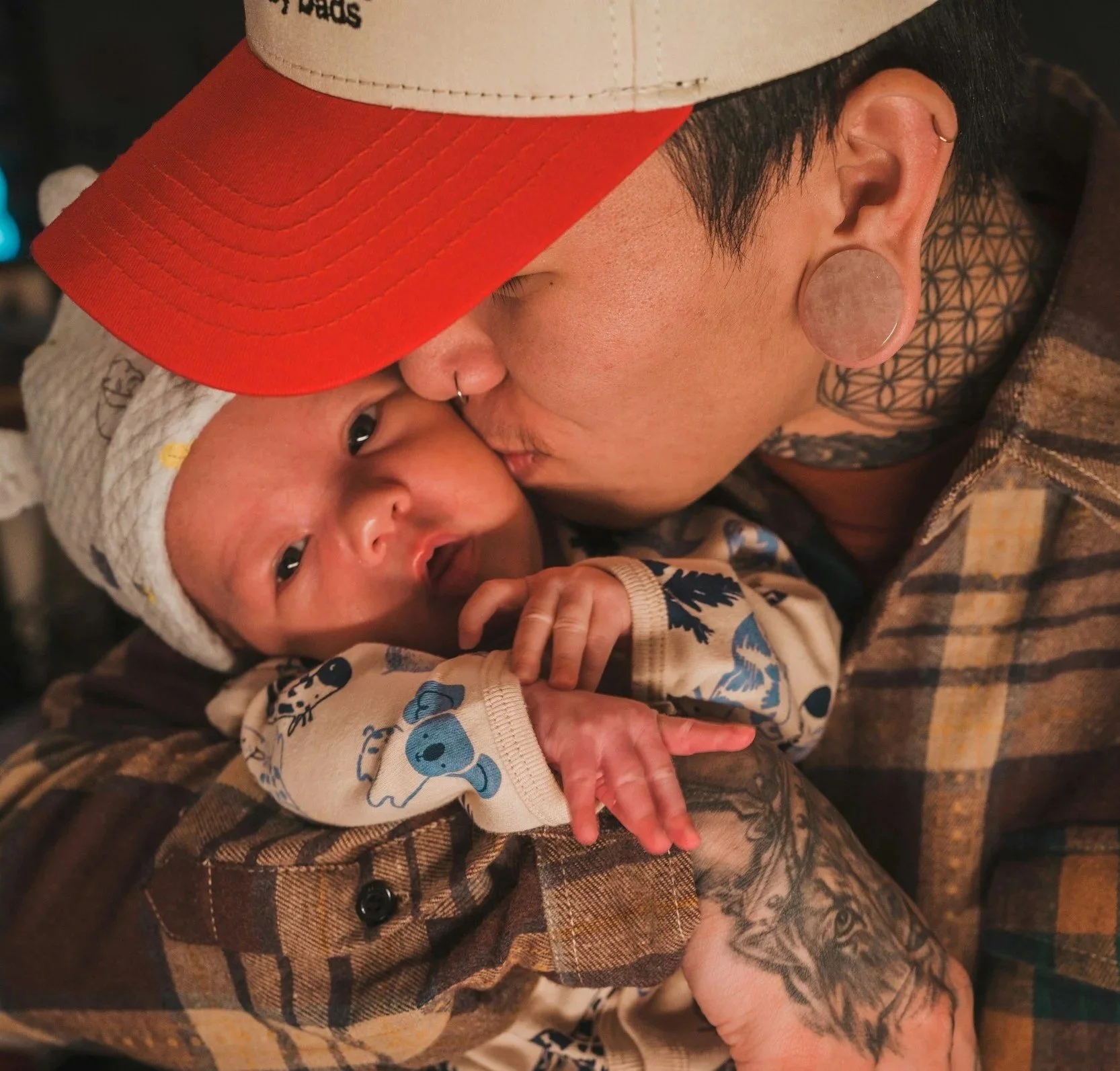
There is a particular kind of quiet that can settle in after a baby arrives.
It’s not just the hush of nap schedules or the way evenings end earlier now. It’s the quieter ache of realizing that the queer community spaces that once held you—sports teams, late dinners, spontaneous gatherings, political organizing, dance nights—may feel suddenly distant or reshaped beyond recognition.
For many LGBTQ parents, early parenthood brings joy and grief at the same time. You’re learning how to care for a newborn while also mourning the loss of how your queer social world and community used to look. Even when this transition is expected, it can still feel profoundly lonely.
The Isolation of Early Parenthood—With a Queer Twist
Research consistently shows that early parenthood is one of the most socially isolating times in our lives, particularly in the first year postpartum (Leahy-Warren et al., 2012). Sleep deprivation, shifting identities, and reduced social time all play a role. For queer parents, that isolation is often compounded.
Many LGBTQ adults spent years intentionally building affirming queer spaces and chosen family—places where identity didn’t need explanation and belonging felt effortless. Parenthood can disrupt access to those spaces, especially when schedules, priorities, or child-free environments no longer align.
You might find yourself missing the ease of being fully known. Missing rooms where your family didn’t feel “different.” Missing the version of yourself who had more time and autonomy. These feelings don’t mean you regret parenthood. They mean you are deeply relational—and therefore, human.
When Mainstream Parenting Groups Fall Short
In search of connection, many queer parents turn to mainstream parenting groups, only to feel more alone. Conversations may center on heteronormative assumptions, rigid gender roles, or family structures that don’t reflect your reality. Even well-meaning spaces can unintentionally reinforce a sense of otherness.
Research shows that LGBTQ parents experience higher levels of minority stress in non-affirming parenting environments, which can increase anxiety and social withdrawal (Goldberg & Smith, 2016). This is one reason many families seek out queer therapy in LA, queer couples therapy, or parent support groups for LGBTQ families—spaces where both identity and parenthood are understood as interconnected, just as they are now for you.
4 Ways to Prioritize Queer Community With a New Baby
When you’re postpartum, exhausted, and emotionally tender, the idea of having to re-build community can feel overwhelming. The truth is that community-building doesn’t need to involve large chunks of time, excessive effort, or over-extending your capacity. It works best when it’s small, intentional, and realistic for this season of life.
Here are 4 tangible ways queer parents can prioritize LGBTQ+ community even with a new baby:
Start with identity-affirming spaces.
Seek out LGBTQ parent support groups or queer postpartum support groups rather than general parenting circles. Sometimes neighborhood parent groups will also have an LGBTQ+ parent subgroup that you join. Being in a space where pronouns, family structures, and identities are addressed, but don’t need to be explained or educated upon, can dramatically reduce emotional labor and increase your felt sense of safety.Name the season you’re in with childfree people.
Saying, “We’re in our newborn era—things are slow and inconsistent,” invites the right kind of people closer. Honest expectations often deepen connection rather than weaken it. It also takes the pressure off of needing to show up in a specific way that no longer feels possible, especially with your queer community who are not parents.Lean into facilitated support.
Many queer parents find relief in structured spaces like parent support groups in LA or a local queer parent meet-up, where connection doesn’t rely on you initiating, hosting, or holding everything together. In these settings, community is built collectively and intentionally, and you can choose the amount of effort you want to put into it.Choose a low-lift connection.
Community doesn’t have to mean weekly plans or big groups. Group chats with other queer parents who may not live near you, short stroller walks, or voice notes during nap time count. Think connection that fits your capacity, not connection that drains it. A small action is better than nothing.
Reimagining Queer Belonging After Baby
It can be helpful to release the idea that queer community after baby should look like your queer community before baby. This chapter often calls for flexibility, different time considerations, and understanding from you and your loved ones.
You don’t have to rebuild your queer community after kids alone.
💛 Rainbow Roots: A Support Group for LGBTQ New Parents was created for this exact season—a space for reflection, connection, and being fully seen during the transition to parenthood.
👉 Join the interest list for Rainbow Roots to be the first to hear about upcoming groups designed specifically for LGBTQ new parents.
References
Leahy-Warren, P., McCarthy, G., & Corcoran, P. (2012). First-time mothers: Social support, maternal parental self-efficacy and postnatal depression. Journal of Clinical Nursing, 21(3–4), 388–397.
Goldberg, A. E., & Smith, J. Z. (2016). Predictors of psychological adjustment in early parenthood among lesbian, gay, and heterosexual couples. Journal of Family Psychology, 30(6), 688–699.