Postpartum Planning for Twin Parents: How to Mentally & Practically Prepare
Welcoming twins is a profoundly joyful and transformative experience — but it’s also a uniquely demanding one. As a reproductive mental health therapist, I often meet expectant twin parents who feel a mix of excitement, awe, and overwhelm. They’re preparing not just for one newborn, but for two distinct little humans — each with their own rhythms, needs, and personalities.
The truth is, even the most organized twin parents can feel unprepared for or apprehensive about the early postpartum period. That’s why developing a postpartum plan in advance is one of the most practical steps you can take to support your whole household’s wellbeing during this intense time.
Four Tips for Twin Parents During the Postpartum Season
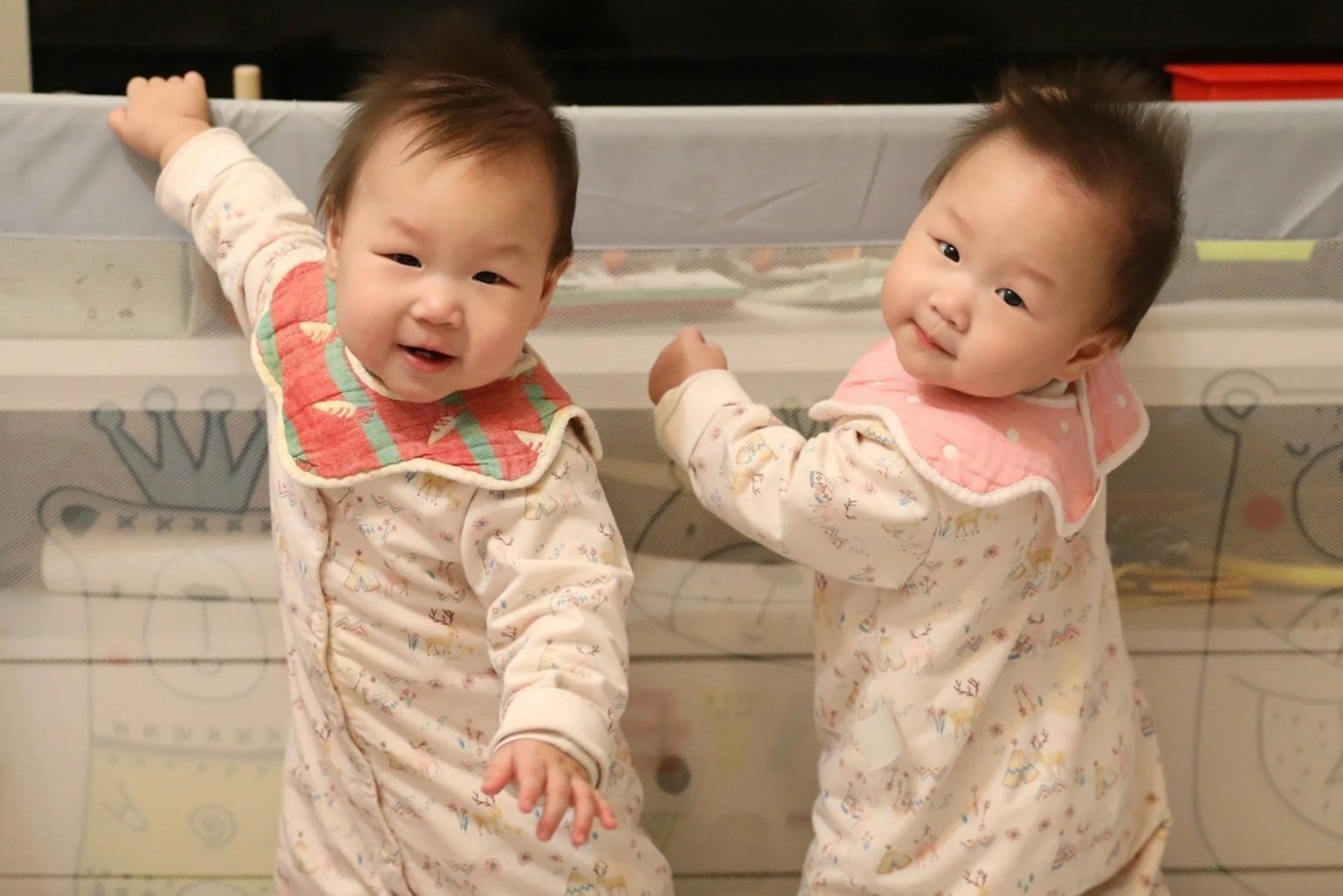
A well-thought-out postpartum plan helps you anticipate your needs and reduce the mental load that comes with constant decision-making. For twin parents, this kind of planning is especially important. Research shows that parents of multiples are at higher risk for postpartum mood and anxiety disorders due to greater caregiving demands, sleep deprivation, and fewer opportunities for rest and recovery (Holditch-Davis et al., 2015).
By taking the time before the babies arrive to plan, you’re not just making logistical choices — you’re protecting your mental health, supporting your future bond with your babies, and creating a stable foundation for your growing family.
Here are four areas to cover when creating your own postpartum plan for twins.
1: Build a Circle of Support
Your postpartum plan starts with identifying your support team. Think beyond “who can help” to “who can help with what.” Assigning roles allows friends and family to show up in ways that actually help you. Who will handle meal delivery or coordinate a grocery list? Who can do laundry or hold the babies while you nap? Even just writing a list of potential tasks for visitors to do and putting it on the fridge can do wonders for reducing the mental load.
Professional support matters, too. Professionals who can support you during the fourth trimester include a postpartum doula, lactation consultant, night nurse, pelvic floor therapist, massage therapist, and psychotherapist.
2: Get Creative About Sleep
Sleep deprivation is one of the biggest stressors for twin parents. One way to think about it is to plan in shifts. Think about how you and your partner (or another caregiver) can alternate nights or feedings. Some families find it helpful to separate the babies for a few nights — one adult sleeps with Baby A while the other rests with Baby B — to ensure at least one parent gets restorative rest.
Even short naps make a difference. Research shows that fragmented sleep can significantly impact mood regulation and increase the risk of postpartum anxiety and depression (Okun et al., 2018). Prioritizing sleep isn’t indulgent — it’s essential for your mental health and your capacity to parent with presence.
3: Tend to Your Emotional Wellbeing
Amid all the logistics, it’s easy to forget your inner world. Becoming a parent to twins often stirs up complex emotions — pride and joy, yes, but also guilt, fear, and grief for the imagined “simpler” or “easier” postpartum you may have envisioned. Give yourself permission to feel it all. The emotional experiences that come with this transition can be intense.
Consider practicing self-compassion and giving yourself grace during the harder moments. Gentle affirmations, short grounding exercises, or mindful breathing can help you stay connected to yourself. If you notice persistent sadness, irritability, or worry, reach out for support. Counseling for twin parents offers a space to process your feelings, build new coping skills, and talk openly about exhaustion, identity shifts, and the challenges of parenting two newborns at once.
4: Be Flexible and Communicate
Flexibility is one of the most useful skills to bring into the postpartum time with twins. Nothing fully prepares you for life with newborn twins, but a thoughtful postpartum plan can make a world of difference. Consider the planning you do in advance to be a gentle guide as opposed to a rigid framework.
Check in weekly with your partner and/or others who are supporting you: What’s working? What’s not? What do we need more of or less of? Flexibility and communication are key as your babies’ needs — and your own — evolve.
Get Support With a Customizable Guide
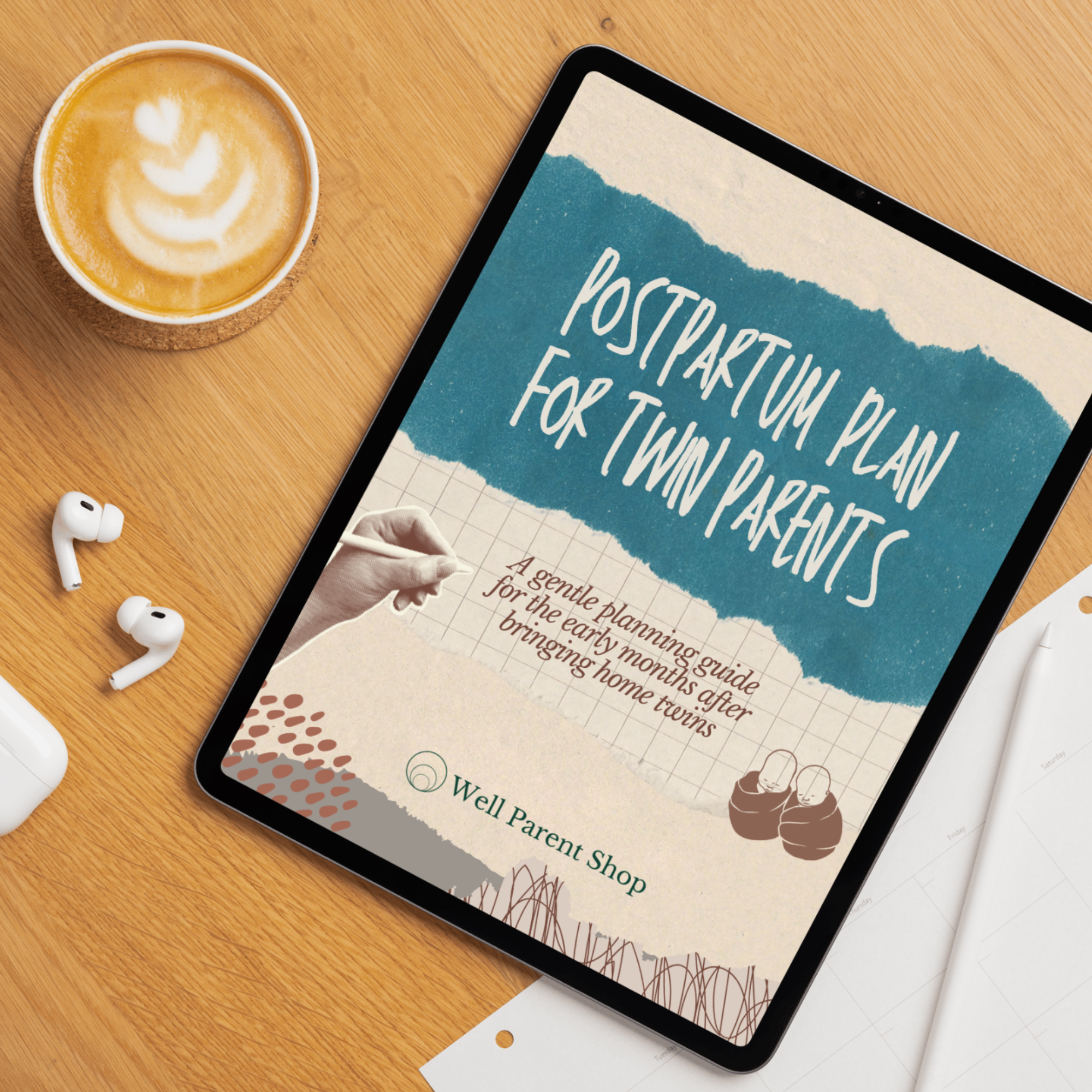
The good news is, you don’t have to start from scratch and you don’t have to figure this out alone. I created a digital Postpartum Plan for Twin Parents resource to walk you step-by-step through the practical and emotional preparation for your babies’ arrival. It includes planning worksheets, recovery checklists, and reflection prompts grounded in evidence-based strategies for twin postpartum wellness.
References
Holditch-Davis, D., Santos, H., Levy, J., White-Traut, R., O’Shea, T. M., Geraldo, V., & David, R. J. (2015). Patterns of psychological distress in mothers of preterm infants. Infant Behavior and Development, 41, 154–163.
Okun, M. L., Mancuso, R. A., Hobel, C. J., Schetter, C. D., & Coussons-Read, M. E. (2018). Poor sleep quality increases symptoms of depression and anxiety in postpartum women. Journal of Behavioral Medicine, 41(5), 703–711.