Waiting for Something Bad to Happen: Pregnancy After Loss
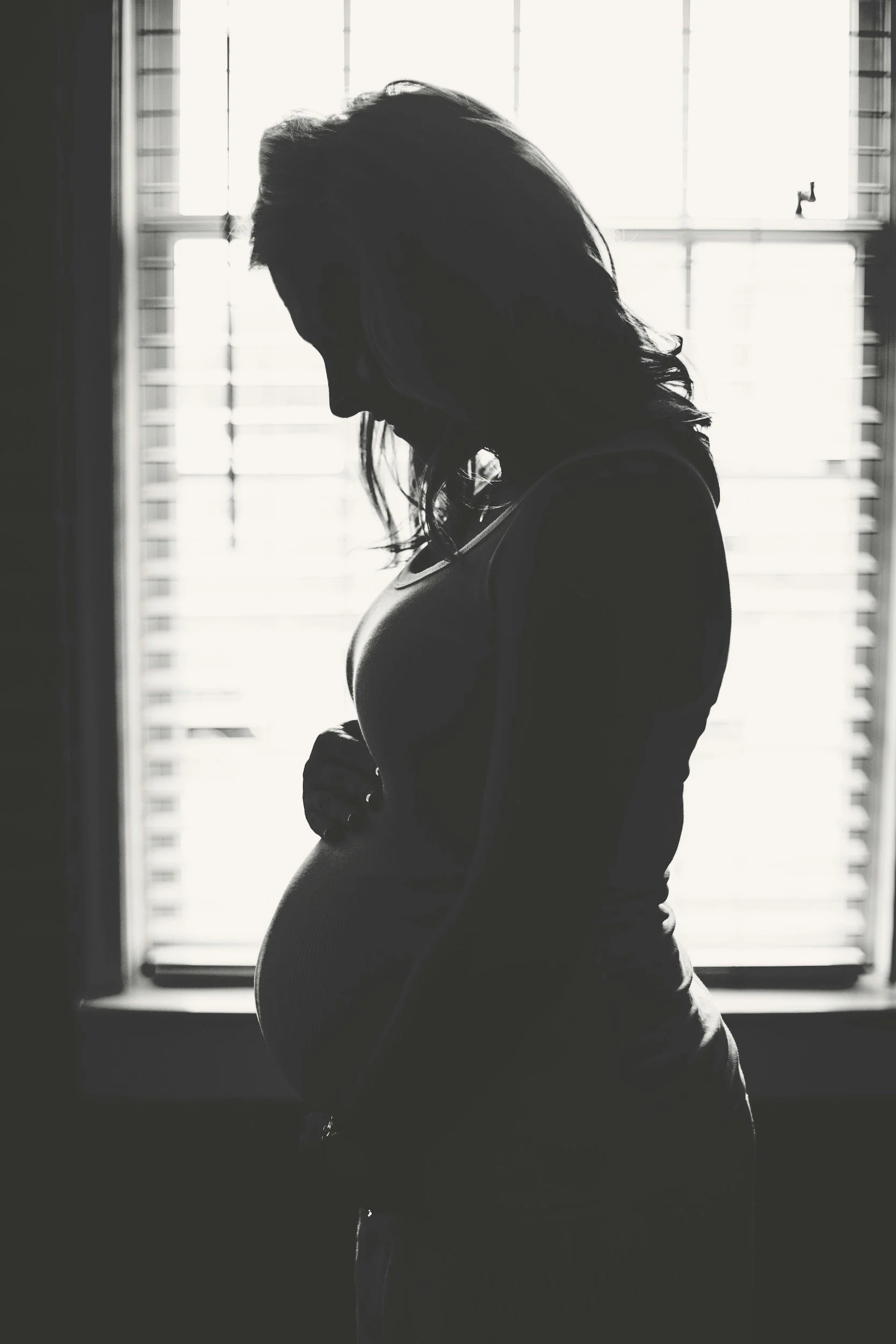
You thought you’d feel grateful. Instead, you’re bracing for something bad to happen.
Perhaps the anxiety during your pregnancy feels constant; a quiet fear humming beneath work tasks, socializing with friends, and calendar reminders. Every cramp sparks panic. Every appointment feels like a test you might fail.
As you are experiencing, pregnancy after loss is not the same as pregnancy before loss. Something important has changed: pregnancy loss rewires your sense of safety.
If you’re feeling scared, worried, or detached, you’re not alone. This post will explain more about why anxiety is so intense during this time, what’s normal and when to seek support, and provide three coping tools to use during your pregnancy.
Why Anxiety Is So Intense After Pregnancy Loss
Before a miscarriage, termination for medical reasons, or stillbirth, pregnancy may have felt hopeful, linear, exciting, and predictable. After a pregnancy loss, your nervous system knows something it didn’t know before: bad outcomes are possible.
Research shows that people who conceive again after a miscarriage often experience significantly elevated anxiety compared to those without prior loss (Blackmore et al., 2011). Another study found that symptoms of depression and anxiety can persist well into a subsequent pregnancy (Farren et al., 2016).
This isn’t a character flaw or deficiency. It’s a trauma response; your brain is trying to protect you.
When something devastating happens unexpectedly, the nervous system becomes vigilant. It scans for danger. It tries to anticipate disappointment and grief so it won’t feel blindsided again. That hypervigilance can show up as:
Constant symptom monitoring
Replaying worst-case scenarios
Difficulty feeling excited
Trouble sleeping before appointments
A sense of waiting for something bad to happen
For many successful professionals who are used to solving problems and managing outcomes, pregnancy after loss is especially destabilizing. There is no spreadsheet for this. There’s no way to work harder and guarantee safety. The loss of control can intensify anxiety during pregnancy in a way that feels deeply unsettling.
What’s Normal in Pregnancy After Loss and When Might You Seek Extra Support?
A certain degree of anxiety in pregnancy after miscarriage is common and understandable. Clinical guidance from the American College of Obstetricians and Gynecologists notes that emotional responses following pregnancy loss frequently include anxiety, sadness, irritability, and difficulty concentrating (ACOG, 2018).
For example, it’s normal to:
Feel more anxious in the first trimester
Experience spikes of fear before ultrasounds
Struggle to attach or “let yourself believe it”
Feel relief after a good appointment that fades quickly
Be more anxious this time than during your previous pregnancy
These common experiences are ideal to address in a support group, as it can help you feel less alone and provide targeted coping tools.
If your anxiety feels relentless rather than situational, you do not have to muscle through it alone. Pregnancy after loss is a uniquely tender season, and specialized support can make a meaningful difference.
Consider reaching out for individual therapy with a specialized provider if you notice:
Panic attacks or intrusive images that feel uncontrollable
Persistent insomnia
Avoiding prenatal care due to fear
Inability to focus at work
Feeling detached from daily life
Constant reassurance-seeking that never truly settles you
Three Supportive Tools for Pregnancy After Loss
Here are a few coping tools that can help your nervous system feel steadier. These are not meant to eliminate fear altogether, but rather manage it effectively when it comes up.
1. “Today I am pregnant.”
When your mind leaps ahead to future possibilities, gently anchor in the present. You might place a hand on your belly and say, “Today I am pregnant.” This phrase helps contain anxiety to the reality of this moment, rather than the imagined future.
2. Limit Reassurance Loops
Googling symptoms or checking for spotting repeatedly may bring momentary relief—but often increases anxiety over time. Try setting boundaries around information seeking. For example, allow yourself one brief check-in with a trusted medical source, then pause. Notice the urge to seek reassurance without immediately acting on it.
3. Schedule Your Worry
Instead of fighting anxious thoughts all day, give them a container. Set aside 10–15 minutes in the evening to write down fears. When worries arise earlier, gently tell yourself, “I’ll think about this during my worry time.” This approach can reduce the constant hum of anxiety and create a sense of agency.
Be patient with yourself as you practice. Your nervous system learned hypervigilance for a reason, so it will take time to feel safer again.
You Are Not Failing at Pregnancy or Parenthood
If you’re pregnant again and scared, it doesn’t mean you’re ungrateful or that you’ll be a bad parent. It means you have loved and lost.
Pregnancy after loss asks you to hold many opposing emotions at once: grief and hope, fear and longing, protection and connection. That is heavy emotional work, especially while managing work, relationships, and the invisible expectations you may place on yourself.
You deserve support that understands this complexity.
If you’re navigating anxiety during pregnancy after a prior loss, I invite you to join the interest list for Holding Both: A Support Group for Pregnancy After Loss. This virtual group is focused on reducing anxiety and emotional triggers and increasing capacity to hold both grief and hope simultaneously.
You don’t have to keep waiting for something bad to happen alone and you don’t have to white-knuckle your way through this pregnancy. Support is here.
References
American College of Obstetricians and Gynecologists. (2018). Early pregnancy loss: Practice bulletin no. 200. Obstetrics & Gynecology, 132(5), e197–e207.
Blackmore, E. R., Côté-Arsenault, D., Tang, W., Glover, V., Evans, J., Golding, J., & O’Connor, T. G. (2011). Previous prenatal loss as a predictor of perinatal depression and anxiety. British Journal of Psychiatry, 198(5), 373–378.
Farren, J., Jalmbrant, M., Falconieri, N., Mitchell-Jones, N., Bobdiwala, S., Al-Memar, M., … Bourne, T. (2016). Posttraumatic stress, anxiety and depression following miscarriage and ectopic pregnancy: A multicenter, prospective cohort study. BMJ Open, 6(11), e011864.